

In the industrial sector, the term "rotary pump" may sound familiar—it is like a diligent porter that delivers the source of power to countless pieces of equipment. Yet when asked about "gear pumps," many people might feel confused: "Aren't these just rotary pumps?"
In fact, gear pumps are among the most classic and widely used members of the rotary pump family! Like a precisely intermeshed mechanical heart, they drive the operation of everything from hemodialysis machines to 10,000-ton oil tankers. Today, we will focus on gear pumps, taking you beyond the broad concept of "rotary pumps" to get to know this master of fluid control hidden deep within industrial equipment.
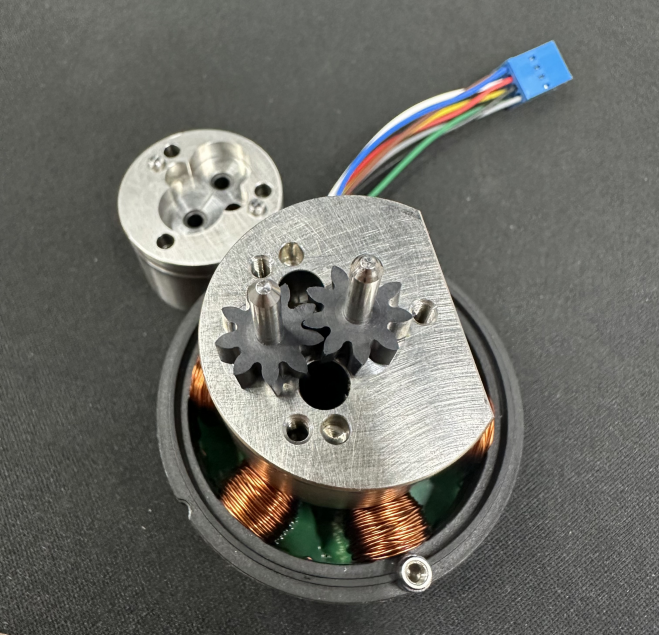
Rotary pumps are a type of pumping equipment that generates kinetic energy through the continuous rotation of internal mechanical components, thereby achieving liquid transfer or pressurization. Unlike reciprocating pumps such as piston pumps, their core advantage lies in non-intermittent and low-pulsation fluid transfer.
②Working Principle: Rotation Is Power
When the rotors (such as gears, screws, etc.) inside the pump rotate at high speed, they form closed "liquid chambers" in the pump cavity. As the rotors move, these chambers continuously shift from the suction port to the discharge port, and the liquid is squeezed through volume changes to achieve stable transfer.
③Key Features
⭐ High Efficiency & Energy Saving: Continuous rotation structure reduces energy loss
⭐ Low Pulsation: Stable liquid flow protects downstream equipment
⭐ Strong Medium Adaptability: Capable of transferring high-viscosity and particle-containing liquids
⭐ Compact & Durable: Simple structure with low maintenance costs
④Rotary Pump's Family Tree
⭐Gear Pump
⭐Vane Pump
⭐Cam Rotor Pump
⭐Screw Pump
②Key Features
⭐ Extremely Compact Structure
⭐ Expert in High-Pressure Output
⭐ Excellent Self-Priming Performance
⭐ Strong Medium Compatibility
⭐ Precise Flow Control
⭐ Simple and Economical Maintenance
③Application for Gear Pump
⭐ General Industry: Inkjet printers, textile machines, etc.
⭐ Food Industry: Coffee equipment, soft-serve ice cream machines, etc.
⭐ Medical Industry: Dialysis equipment, IVD (In Vitro Diagnosis), etc.
⭐ Water Quality Testing: Sewage treatment, fluid transfer for online monitoring systems, laboratory analysis equipment, etc.
⭐ Liquid Cooling Technology: Super charging piles, data centers, new energy battery cooling, etc.
⭐ Construction Machinery: Power core of hydraulic systems
⭐ Automotive Manufacturing: Oil pressure control for automatic transmissions
⭐ Energy Sector: Heavy oil transfer, lubricating oil pressurization
⭐ Aerospace: Liquid fuel transfer, etc.
Whether it's the stability and efficiency of rotary pumps or the precision and reliability of gear pumps, they all reflect the modern industry's ultimate pursuit of fluid control. If you are looking for efficient, durable, and intelligent fluid control solutions, please feel free to contact us—let our professional team customize an exclusive "liquid power heart" for you!