

In the industrial marking sector, inkjet printers--critical equipment for product traceability and quality control--have deeply penetrated dozens of niche industries, including food packaging, pharmaceutical manufacturing, and electronic component production. Their core performance depends not only on nozzle precision and control systems, but also on the stable output of fluid delivery systems. Micro gear pump, with advantages such as precise flow control, stable pressure, and strong adaptabilitu, have become the core component of choice for leading global inkjet printer brands. As a manufacturer specializing in microfluidics control technology, J-Tron combines industry practices to analyze the technical adaptation logic between gear pump and inkjet printer
1. Precise Flow Control: The Core Premise for Ensuring Printing Quality
The clarity of inkjet printer markings directly relies on the stability of ink droplet size and ejection trajectory, which in turn requires miron-level control of ink flow. In Continuous Ink Jet (CIJ) technology, ink droplets are generated hundreds of times per second, demanding a fluid system taht delivers uniform ink flow to avoid defects like streaking or broken codes.
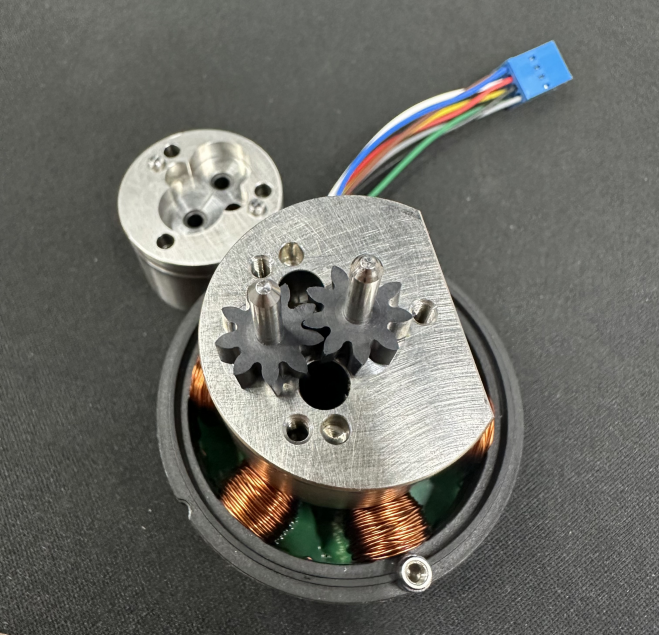
Gear pumps adopt a positive displacement working principle, achieving quantitative delivery through volume changes in precisely meshed gear grooves. With a flow rate error controlled within ±1%, they can accurately match ink demand at different printing speeds. Taking J-Tron’s Magnetic Drive Gear Pump as an example, its displacement range of 0.07-1.80ml/r supports applications from fine marking on tiny electronic components to wide-format printing on large pipes. Even under a speed adjustment range of 100-5400rpm, it maintains linear flow output, ensuring ink droplet volume stability at the 3-picoliter level. This stability is the key foundation for sharp printed characters and readable barcodes.
2. Stable Pressure: Solving Industry Pain Points of Clogging and Cavitation
Inkjet printer nozzles have a diameter of only 30-80 microns, placing strict requirements on the pressure stability of fluid systems. A pressure fluctuation exceeding ±0.1bar can cause issures like ink droplet delection and nozzle clogging, while frequent shutdowns for cleaning have long plagued enterprises.
The low-pressure pulsation design of gear pumps addresses this problem at its source. By optimizing gear tooth profiles and cavity structures, pressure fluctuations are minimized, effectively preventing air bubble formation (caviation) during ink delivery and reducing clogging risks caused by impurity deposition. J-Tron’s Micro Gear Pump High Pressure ustilizes magnetic drive technology, eliminating leakage risks and friction interference from traditional mechanical seals. Combined with food-grade 316L pump body and precision-machined modified PEEK gears, it achieves stable output within 6bar, meeting the pressure requirements of inkjet printers’ closed-loop ink circulation systems. This stability not only reduces nozzle maintenance frequency by over 90% but also cuts solvent evaporation by 30%~40%, balancing production efficiency and environmental protection.
3. Wide Compatibility: Adapting to Multiple Ink Types and Working Conditions
Inkjet printers must handle compex fluids, ranging from water-based dyes to high-viscosity pigment inks (e.g., white ink, ceramic ink). Some inks contain nanoscale particles, posing challenges to pump wear resistance and chemical compatibility.
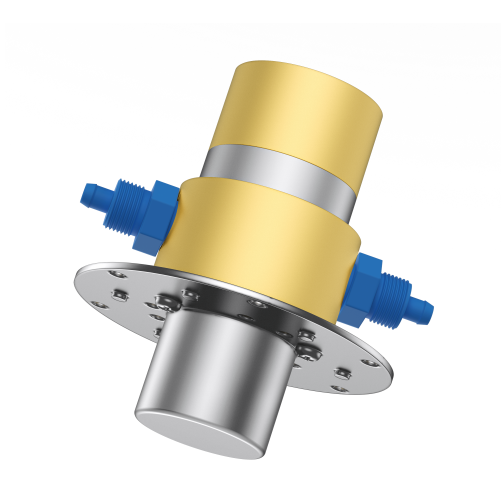
The structural characteristics of gear pumps give them strong fluid adaptability. J-Tron’s GPT Wear-Resisting Micro Gear Pump, featuring Tungsten Steel Gears and Titanium Nitride Coated pump body, can handle fluids with viscosities ranging from 0.5 to 1500cps--even special inks with abrasive particles--for long-term stable delivery. Meanwhile, flexible selection of sealing materials (e.g., PTFE) enable compatibility with corrosive inks (acidic, solvent-based), meeting strict compliance requirements in the pharmaceutical and chemical industies. This wide adaptability allows gear pumps to cover full-scenario applications, from high-speed production lines to low-temperature storage environments.
Conclusion: Technilogical Synergy Drives Industry Efficiency Upgrades
From fluid control precision to equipment operational stability, gear pumps perfectly match the technical needs of inkjet printers, becoming an irreplaceable core component in the industrial markign field. With over a decade of experience in micro gear pump technology, J-Tron offers customized R & D capabilities to optimize core parameters (e.g., displacement, pressure, materials) based on customer needs, providing full-chain support for inkjet printer manufacturers--from components to systems.