

Hemodialysis/peritoneal dialysis equipment, as "life-support devices" in the medical field, the safety and stability of their fluid circuits are directly related to patients' lives and health. Among them, valves, as the "core switches" for dialysate delivery, waste fluid discharge, and drug solution proportioning, need to meet three strict requirements: first, media isolation without contact to avoid direct contact between valve components and dialysate/blood causing contamination; second, ultra-low leakage to prevent risks to avoid fluid cross-contamination leading to abnormal dialysate concentration; third, long service life and high reliability to adapt to the equipment's continuous operation for 8-12 hours per day. J-Tron's Ta22T76 series dialysis valve customized for the dialysis industry, with core advantages of "full isolation structure, high sealing performance, and ultra-long service life", has become the preferred component for dialysis equipment manufacturers. As a manufacturer specializing in micro liquid control component, J-Tron combines industry popular science and parameter analysis to interpret the adaptation value of media-separated valve in dialysis equipment.

1. Three Core Requirements of Dialysis Equipment for Valves
Media Isolation Requirement: Dialysate needs to remain sterile and free of impurities. Valves must adopt a "media isolation structure" to avoid direct contact between metal components, coils and dialysate, preventing ion leaching or material contamination, which is the primary prerequisite for ensuring patients' blood safety;
Sealing and Leakage Requirement: Deviations in dialysate concentration (such as bicarbonate concentration fluctuation ±1mmol/L) will affect dialysis effectiveness. Valves must achieve "zero leakage" under operating pressure, especially in the dialysate delivery circuit (pressure usually 3-4bar), with a leakage rate lower than the industry "bubble-tight" standard;
Service Life and Stability Requirement: A single dialysis equipment operates more than 10,000 times per year. Valves must withstand more than 3 million on-off cycles, while maintaining stable performance within the dialysate temperature range of 5-90℃, avoiding low-temperature jamming and high-temperature sealing failure.
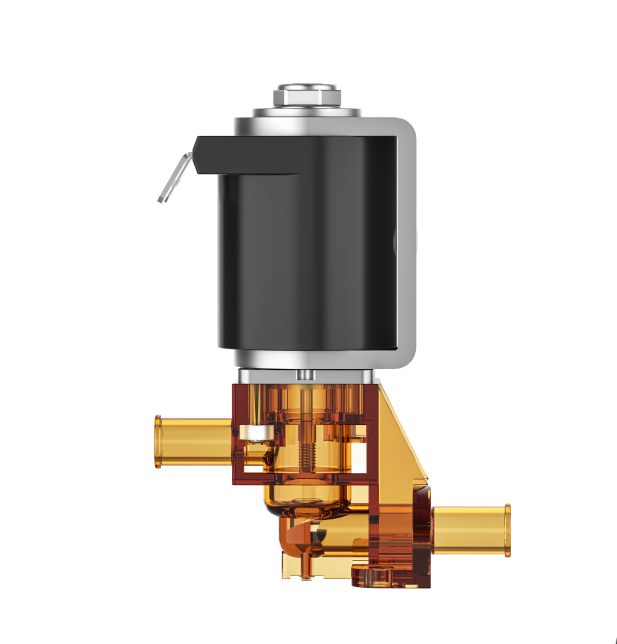
2. J-Tron Ta22T76 Series Media Separated Solenoid Valve: The Adaptable Choice for the Dialysis Industry
Based on the core needs of dialysis equipment, J-Tron Ta22T76 series Media Separated Solenoid Valve achieves precise adaptation through structural design and parameter optimization:
Full Media Isolation Structure: Adopting PTFE bellows + EPDM seal combination, the valve body is made of medical-grade PEI, completely isolating the coil from the fluid channel, avoiding metal ion leaching, and meeting the biocompatibility requirements of medical equipment;
High Sealing and Leakage Prevention: Achieves "bubble-tight" sealing under 7bar (port A) and 4bar (port B) pressure, far exceeding the 3-4bar pressure requirement of the dialysate circuit, completely eliminating the risk of fluid cross-contamination and ensuring stable dialysate concentration;
Wide Temperature Range and Long Service Life: Adapts to a media temperature of 5-90℃, covering dialysate heating (around 37℃) and equipment disinfection (80-90℃) scenarios; service life exceeds 3 million on-off cycles, meeting the dialysis equipment's usage needs and reducing maintenance frequency;
Precise Flow Control: 4.4mm orifice design, combined with 24V DC drive (resistance 76Ω, power consumption 7.68W), can stably control dialysate flow, adapting to the "low-flow precise delivery" needs of dialysis equipment (such as peritoneal dialysate infusion flow 6-8L/min).

Conclusion: Technology Empowers the Safe Operation of Dialysis Equipment
The "zero-risk" operation of dialysis equipment relies on the reliability of every core component. J-Tron Ta22T76 series Mini Solenoid Valve For Dialysis, with core advantages of "media isolation, high sealing, and long service life", provides a safe and efficient fluid control solution for the dialysis industry. Backed by more than ten years of experience in micro fluid control technology, J-Tron can adjust interface specifications and voltage parameters according to customer needs, and the products are compatible with hemodialysis machines, peritoneal dialysis machines and other types of equipment.